Rust solo survival explained through Blooprint's 14-day Apex Survivor movie
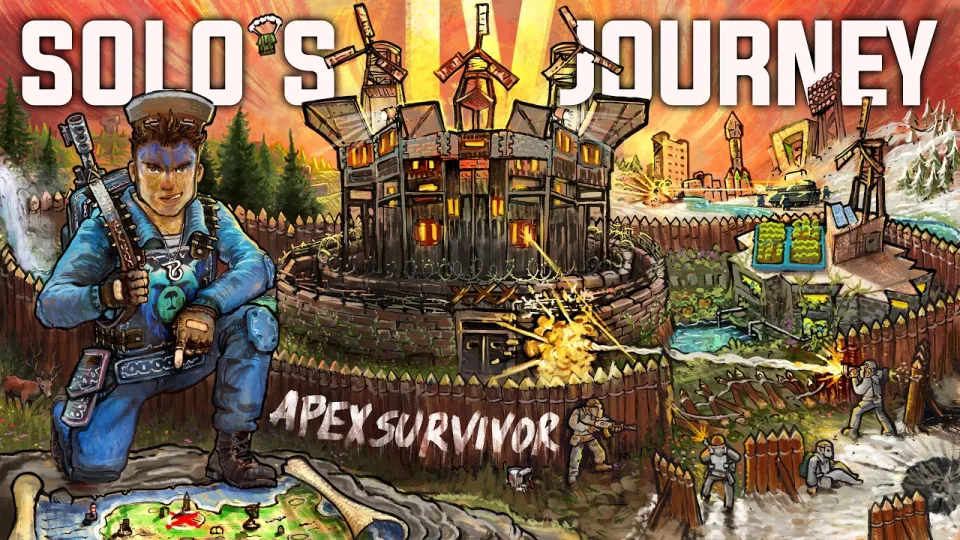
Video: Rust - A Solo's Journey IV: Apex Survivor (Movie)
You can order the same kind of articles for your own video to boost it on YouTube and Google. Just message the Telegram bot @sat_sit_bot. The bot writes and publishes the articles itself (with your YouTube video embedded) on popular topical websites (no ads). Your first 50 articles are free.
· based on the channel Blooprint
Key takeaways
- Blooprint's Apex Survivor movie covers a 14-day solo Rust wipe in a single video cut into 12 chapters plus an epilogue.
- The run was filmed and edited over 300+ hours and released to mark 2.5 million subscribers on the channel.
- A companion site, solosjourneytracker.com, lets viewers enter a timestamp and see the exact progress of the run at that point.
- The movie runs about 4 hours 50 minutes, with the first chapter starting near the two-minute mark.
- Solo Rust on a long wipe means one player handling farming, base defense, monuments, oil rig and cargo ship alone.
Rust solo survival is a test of pacing rather than raw aim: one player must farm, build, defend and raid without a clan to cover downtime. Blooprint's movie "A Solo's Journey IV: Apex Survivor" documents exactly that — 14 days of solo play on one wipe, cut into 12 chapters plus an ending, with a companion tracker at solosjourneytracker.com where you enter a timestamp and see the state of the run at that moment.
What the Apex Survivor run actually covers
The film is a long-form solo Rust project, not a highlight reel: it follows one player from spawn to a fortified endgame base across a 14-day wipe. The description credits Blooprint as the sole editor and filmmaker, with more than 300 hours of filming and editing, and the upload was framed as a 2.5 million subscriber milestone. The structure is 12 numbered chapters plus "The End", with the introduction running to roughly the two-minute mark and the first chapter opening right after it. The full runtime sits near 4 hours 50 minutes, so the pacing is closer to a series than a single match: early chapters handle spawn, first tools and a starter base, middle chapters cover monument farming, oil rig and cargo ship, and later chapters move into raids, revenge and base defense.
The solo Rust checklist that drives the story
A 14-day solo wipe only works if progress is measurable, and this project makes that literal with a public checklist. The tracker site lists the objectives of the run and updates as the movie advances, so a viewer can pause at any point, type the timestamp into the site and see which goals were already done. In practice a solo checklist for a long wipe usually covers:
- Starter base and tool cupboard secured within the first day.
- Workbench progression, typically from tier 1 to tier 3, plus research of core blueprints.
- Monument runs for scrap and components, with recycling routed to the same trip.
- Oil rig and cargo ship clears once gear and meds allow it.
- A farm base or secondary compound to spread risk.
- Raid preparation: explosives, rockets, ladders and a plan for counters.
The value of tracking is honesty about time: solo players lose wipes to unfocused sessions, and a checklist forces each play session to end with something built, researched or destroyed.
Base building and farming decisions in solo Rust
Solo base design in Rust is a trade-off between cost and survivability, and long-wipe runs tend to favor compact, layered cores over sprawling compounds. A small footprint with a triangle or honeycomb core, separate loot rooms and a discreet entrance survives better than a large base that signals wealth from the road. Farming follows the same logic: a solo player who builds next to a quiet monument can recycle components on short trips, while a player who settles near a busy road trades convenience for constant PvP pressure. The movie's farm-base approach reflects a common solo pattern — keep the main base modest, keep a second stash elsewhere, and never move all loot in one trip. On a 14-day wipe, the real enemy is attrition: every unnecessary fight costs kits, and every kit costs scrap that could have gone into blueprints.
Oil rig, cargo ship and monument routes without a team
Oil rig and cargo ship are the highest-value solo objectives in Rust, and both punish players who arrive without an exit plan. A workable solo route looks like this: scout the approach, clear scientists from range where possible, keep healing items on the quick bar, and leave the loot run only after securing a route back to base. Cargo ship rewards timing — arriving early and controlling the deck beats arriving late into a fight with another group. Monuments work the same way on a smaller scale: pick two or three that share a recycling point, learn the crate and puzzle timers, and rotate rather than wandering. In a long solo wipe, consistency beats ambition; a player who clears the same safe route every session ends up with more scrap than one who chases every airdrop and explosion on the map.
PvP, raids and revenge in a one-player wipe
Solo PvP in Rust is about choosing fights that pay for themselves, and the movie's later chapters lean on that principle. Defending a base against a raid is the one situation where a solo player cannot simply walk away, which is why base location and offline protection matter more than raw combat skill. Revenge raids are a recurring theme in solo stories because they convert a loss into a goal, but they also drain resources: a solo player needs enough explosives for one attempt, not a prolonged campaign. The practical lesson is to keep a raid budget separate from the main stash and to scout a target's activity pattern before committing. Counters are the other constant — on a populated server, any explosion draws attention, so a solo raider should plan the exit before the first wall comes down.
How viewers watch a five-hour Rust movie
The length is the point: a near-five-hour runtime works because the story is structured in chapters, and viewers commonly treat it as a multi-part watch spread over several days. That is also why the timestamp tracker exists — jumping back into a long video is easier when you can check what was already completed. The audience response to the upload shows the format has legs: a long-form solo documentary pulls in players who no longer have time to grind a wipe themselves but still want the full arc of base building, farming and raiding. For anyone planning their own solo run, the movie works as a reference for pacing rather than a tutorial: it shows how a wipe looks when objectives are set in advance and sessions have a defined end point.
Useful links from the video
- solosjourneytracker.com — the full checklist and timestamp-based progress tracker for the movie.
- Blooprint Vinyl Figure — limited Youtooz figure, available until October 27, 2026.
- Solo's Journey mousepads and playmats — Epic Desk collection, available until January 3, 2027.
- Hires Studio — animated intro.
- Veys — thumbnail art.
Final thoughts on solo Rust pacing
Apex Survivor works as a case study in how a solo Rust wipe stays interesting for 14 days: fixed objectives, a base that does not advertise itself, and monument routes repeated until they pay. The near-five-hour cut is a deliberate format choice, and the chapter structure plus the timestamp tracker make it watchable in pieces. Blooprint, the channel behind the movie, built the project around a 2.5 million subscriber milestone and treats solo survival as a story with a beginning, a raid arc and an ending. If you want to follow the run step by step, open solosjourneytracker.com, enter your timestamp and check the checklist as you watch.
Source: Rust - A Solo's Journey IV: Apex Survivor (Movie) · Markdown version
Questions & answers
How long is Blooprint's Apex Survivor Rust movie?
The video runs close to 4 hours 50 minutes and is split into an introduction, 12 numbered chapters and a final section called The End. The first chapter begins at roughly the two-minute mark, so the story starts almost immediately after the intro.
What is solosjourneytracker.com used for?
It is a companion site for the movie that lists the full checklist of the run. You type in your timestamp and the site shows what had been completed at that point, which helps when watching a long video across several sessions.
Can a solo player realistically do oil rig and cargo ship in Rust?
Yes, but the approach matters more than the gear: scout first, clear scientists from range, carry healing items and plan the exit before looting. Arriving early on cargo ship and rotating between two or three monuments with a shared recycler keeps a solo run profitable.
Why do solo Rust players build small bases on long wipes?
A compact, layered base costs less to build and attracts less attention than a large compound, which matters when there is no team to defend it. Keeping a second stash and moving loot in small trips limits the loss if the main base is raided.